
Learning to play the guitar can be an exciting and rewarding experience. For many people, the guitar is the first musical instrument they choose because it can be used to play a wide variety of songs and musical styles. From Bollywood and acoustic music to pop, rock, blues and jazz, the guitar can become a...
How to Start Learning Guitar: A Beginner’s Guide to Playing Your First Songs
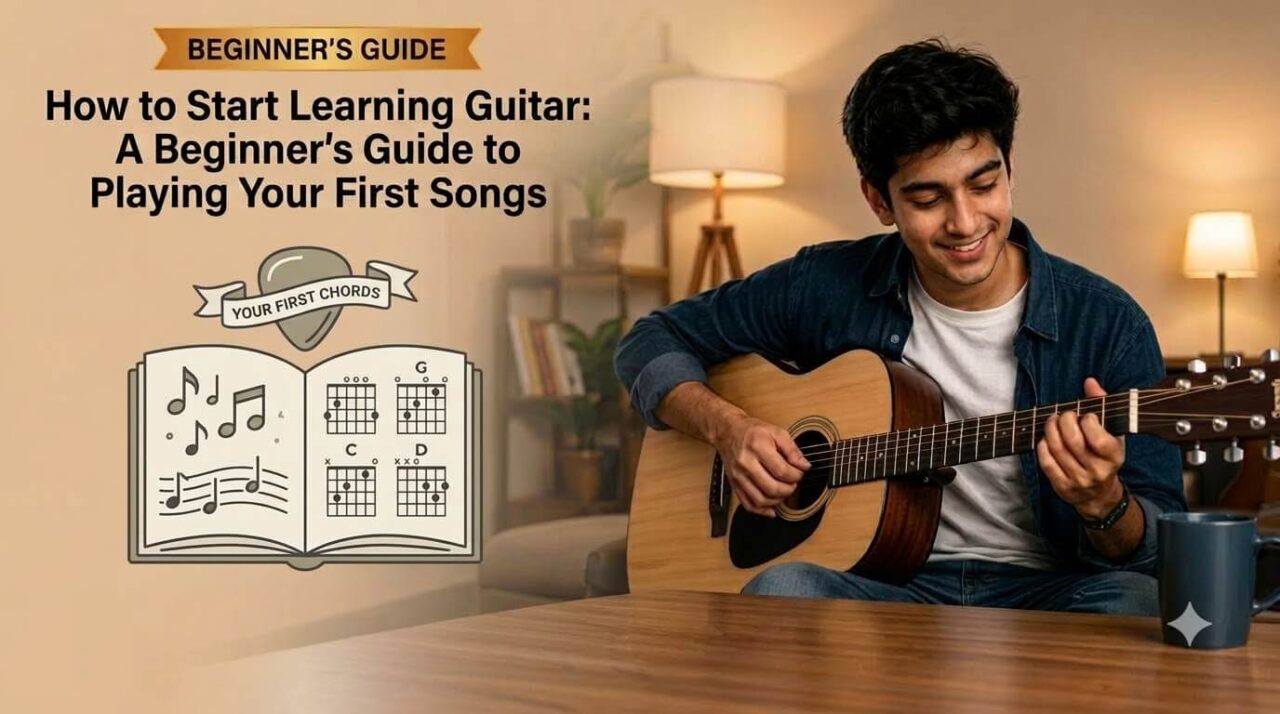
Learning to play the guitar can be an exciting and rewarding experience. For many people, the guitar is the first musical instrument they choose because it can be used to play a wide variety of songs and musical styles. From Bollywood and acoustic music to pop, rock, blues and jazz, the guitar can become a versatile part of your musical journey.
However, getting started can sometimes feel confusing. Which guitar should you buy? What should you learn first? How often should you practise? Should you learn chords, scales or songs first?
The good news is that beginners do not need to know everything before they start. With proper guidance, regular practice and a structured learning approach, anyone can gradually develop their guitar skills.
Why Is Guitar a Good Instrument for Beginners?
One of the biggest advantages of learning guitar is its versatility. A student can begin with simple chords and gradually progress toward more advanced techniques.
Guitar learning can also encourage several useful skills, including concentration, coordination, rhythm, memory and patience. Students need to coordinate both hands while listening carefully to timing and musical notes.
For children, learning guitar can become a creative activity outside school. Teenagers may enjoy learning their favourite songs, while adults can learn guitar as a hobby or continue a musical interest they had earlier in life.
Start With the Basics
A common mistake beginners make is trying to play difficult songs immediately. Although playing a favourite song can be motivating, understanding the fundamentals first will make learning much easier.
The first stage should include understanding the parts of the guitar, correct posture, how to hold the instrument, how to position the fingers and how to use a pick if required.
Students should also become familiar with the strings and basic musical notes.
A teacher can help correct posture and hand position early, which can prevent beginners from developing uncomfortable or inefficient playing habits.
Learn Basic Chords
Chords are one of the most important parts of beginner guitar learning.
Basic open chords can allow students to play many popular songs once they understand how to change between them smoothly.
Beginners commonly start with simple major and minor chords and gradually learn additional chord shapes.
The goal should not simply be to memorize chord diagrams. Students should also understand how chords are formed and how they work together in a song.
With regular practice, changing from one chord to another becomes more natural.
Develop Your Strumming Technique
After learning basic chords, rhythm and strumming become extremely important.
A guitarist can know many chords but still struggle to play a song if the rhythm is inconsistent.
Beginners can start with simple downstrokes before moving to more varied strumming patterns. Practising with a metronome can also help students develop a consistent sense of timing.
It is better to practise a simple rhythm accurately than to rush into complicated patterns without control.
Don’t Ignore Music Theory
Some beginners believe music theory is unnecessary because they only want to play songs.
Basic theory, however, can make learning easier in the long term.
Understanding notes, scales, keys, chords and rhythm helps students understand why certain chords work together and how songs are structured.
Music theory doesn’t have to be complicated. It can be introduced gradually alongside practical guitar lessons.
Learn Songs You Enjoy
One of the best ways to stay motivated is to learn music you genuinely enjoy.
Once a student understands basic chords and rhythm, the teacher can introduce songs that match the student’s ability.
For example, a beginner may start with songs containing a few simple chords. As their confidence improves, they can move toward more challenging arrangements.
Learning songs also helps students apply concepts taught during lessons.
How Much Should a Beginner Practise?
Consistency is more important than practising for many hours once a week.
A beginner may benefit from short, focused practice sessions several times a week. Even 20 to 30 minutes of concentrated practice can be valuable when done consistently.
A simple practice routine can include:
- 5 minutes of warm-up
- 5 minutes of chord practice
- 5 minutes of strumming
- 10 minutes of song practice
- 5 minutes reviewing difficult sections
As the student becomes more advanced, practice time can gradually increase.
Guitar Learning for Kids, Teens and Adults
There is no single age at which someone must learn guitar.
Children can learn through age-appropriate exercises and simple songs. Teenagers often enjoy contemporary music and may want to learn songs they hear regularly. Adults can also learn guitar successfully, whether their goal is personal enjoyment, performance or developing a serious musical skill.
The teaching method should be adapted to the learner’s age, experience and objectives.
Should You Learn Guitar Alone or With a Teacher?
Online videos and tutorials can be useful, but beginners may struggle to identify mistakes in posture, fingering, timing or technique.
Structured guitar lessons provide feedback and progression. A teacher can also adjust exercises according to the student’s level instead of asking every learner to follow exactly the same routine.
Jays Octave offers guitar learning for Kids, Teens and Adults, with structured music education designed around different levels of learners. The school also provides group, private and online learning options.
For someone searching for guitar classes in Surat, having access to structured practical and theoretical learning can make the process more organised.
How to Choose the Right Guitar
Beginners do not necessarily need the most expensive guitar.
The right instrument should be comfortable to hold, properly set up and appropriate for the student’s size and playing goals.
A teacher can also help beginners understand whether an acoustic, classical or electric guitar would be suitable.
Common Beginner Mistakes
Some common mistakes include:
Practising Without a Routine
Random practice often produces slower progress. A simple routine makes it easier to track improvement.
Playing Too Fast
Speed should come after accuracy. Practise difficult sections slowly before increasing the tempo.
Ignoring Finger Position
Incorrect positioning can make chords harder and may cause unnecessary discomfort.
Learning Too Many Things at Once
It is better to master a few concepts properly before moving on.
Giving Up Too Early
Guitar requires coordination that may feel difficult initially. Progress often becomes easier after consistent practice.
How Long Does It Take to Learn Guitar?
There is no fixed answer.
Someone practising regularly may be able to play simple songs within a relatively short period, while developing advanced technique can take years.
Progress depends on several factors:
- Previous musical experience
- Practice consistency
- Instructor guidance
- Difficulty of the material
- Individual learning speed
- Musical goals
The most important objective for beginners should be steady improvement rather than comparing their progress with someone else.
Start Your Guitar Journey
Learning guitar is not about becoming perfect immediately. It is about developing skills step by step and enjoying the process.
Start with the fundamentals, practise regularly, learn songs you enjoy and gradually challenge yourself with more advanced material.
For students and families looking for structured music and guitar learning in Surat, Jays Octave provides guitar courses for Kids, Teens and Adults, alongside other musical disciplines.
Frequently Asked Questions
Can a complete beginner learn guitar?
Yes. Guitar courses can be designed for students with no previous musical experience.
What age is suitable for learning guitar?
Children, teenagers and adults can all learn guitar. The teaching approach should be adjusted to the learner.
How often should I practise guitar?
Regular practice several times a week is generally more useful than occasional long sessions.
Can I learn Bollywood songs on guitar?
Yes. Once you understand basic chords and rhythm, many songs can be adapted for guitar.
Should I learn chords or scales first?
Most beginners benefit from learning basic chords and rhythm while gradually being introduced to scales and music theory.
Can I learn guitar online?
Yes. Online guitar lessons can work well when they include live guidance, structured lessons and regular practice.