
Choosing a first musical instrument can be surprisingly difficult. Two of the most popular choices for beginners are the keyboard and piano. At first glance, they may appear similar because both use a familiar arrangement of black and white keys. However, the instruments are different in construction, sound, features and playing experience. If you are...
Keyboard vs Piano: What’s the Difference and Which One Should You Learn?
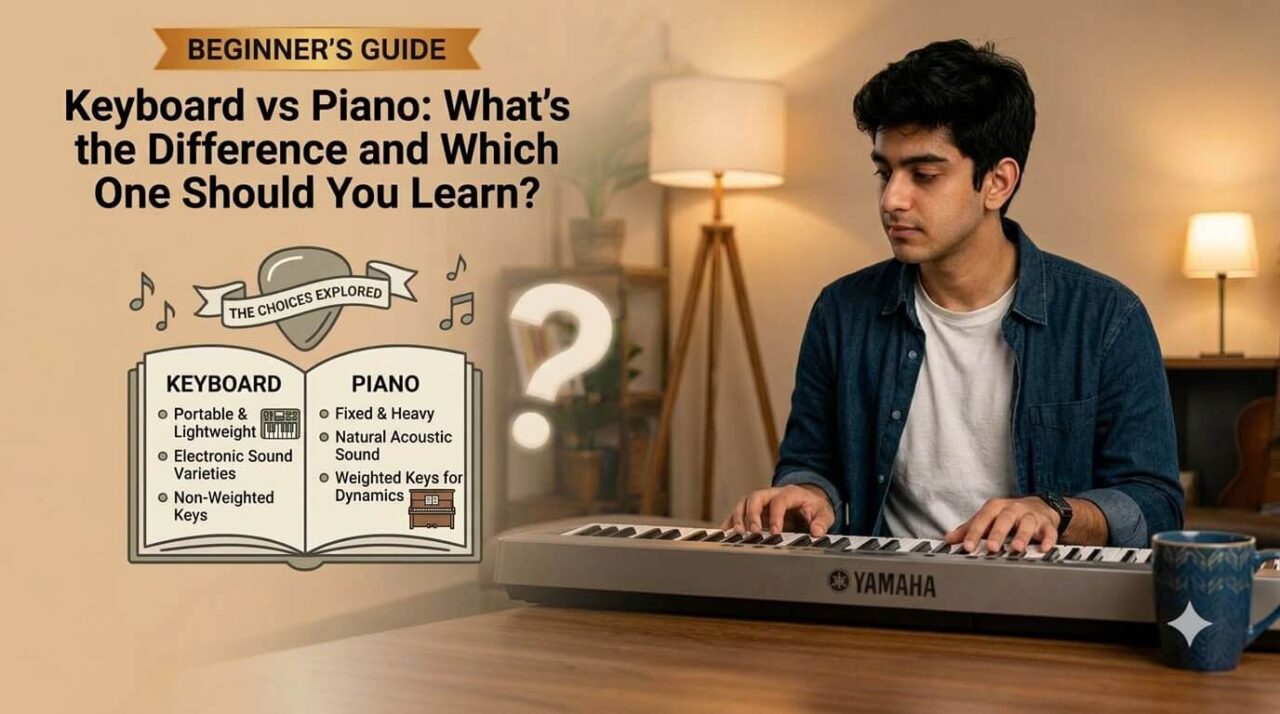
Choosing a first musical instrument can be surprisingly difficult. Two of the most popular choices for beginners are the keyboard and piano. At first glance, they may appear similar because both use a familiar arrangement of black and white keys. However, the instruments are different in construction, sound, features and playing experience.
If you are considering music lessons for yourself or your child, understanding the difference between keyboard and piano can make the decision easier.
Both instruments can provide a strong musical foundation. The better choice depends on your goals, available space, budget, age and the type of music you want to play.
What Is a Piano?
A piano is an instrument designed primarily around piano sound and expressive playing.
Traditional acoustic pianos use strings and hammers to produce sound. Digital pianos reproduce the piano experience electronically and often include weighted or semi-weighted keys.
Piano playing focuses heavily on dynamics, touch, articulation and control. A player can create softer or stronger sounds depending on how the keys are played.
This makes piano a powerful instrument for developing musical expression.
What Is a Keyboard?
A keyboard is an electronic musical instrument that can provide a wide variety of sounds.
Depending on the model, a keyboard may include piano, organ, strings, brass, synthesizer and other sounds. Many keyboards also include rhythms, accompaniment patterns and recording features.
This versatility makes keyboards popular among beginners, hobby musicians and performers.
Keyboard vs Piano: The Main Differences
1. Sound
A piano primarily focuses on piano sound, while a keyboard can reproduce many different instruments and effects.
2. Keys
Many acoustic and digital pianos are designed with a full piano-style keyboard. Keyboards can come in different sizes and key configurations.
3. Touch
Digital pianos often use weighted keys to replicate the feel of an acoustic piano. Some keyboards have lighter keys.
4. Portability
Keyboards are generally easier to transport. This can be useful for students who need flexibility.
5. Features
Keyboards may include rhythms, voices, effects and accompaniment features that are not available on a traditional acoustic piano.
6. Space
A keyboard generally requires less space, making it practical for apartments and smaller rooms.
Which Is Better for Beginners?
There is no universal answer.
If someone wants to focus primarily on piano technique, expression and traditional piano playing, a piano or digital piano may be a suitable choice.
If the student wants to experiment with different sounds, rhythms and contemporary music, a keyboard may be more attractive.
For children, the decision can also depend on their interest. Some children may enjoy experimenting with different sounds, while others may prefer learning piano pieces.
Can Keyboard Students Learn Piano Later?
Yes.
Keyboard learning can provide students with useful knowledge about notes, chords, scales, rhythm and music theory.
However, students who eventually want to become serious pianists may need to spend time developing piano-specific techniques such as finger strength, touch control, dynamics and pedalling.
This is why choosing the right learning path is important.
What Do Students Learn in Keyboard Classes?
A structured keyboard course can include:
- Understanding keyboard layout
- Musical notes
- Finger positioning
- Scales
- Chords
- Rhythm
- Melody
- Music theory
- Song arrangements
- Performance skills
As students advance, they can explore more complex chords, accompaniment patterns and musical styles.
Jays Octave offers keyboard courses from basic to advanced levels and provides learning options for Kids, Teens and Adults.
What Do Students Learn in Piano Classes?
Piano lessons can cover:
- Correct hand position
- Piano notes
- Scales
- Chords
- Music reading
- Rhythm
- Dynamics
- Pedalling
- Coordination
- Performance
The website also highlights piano learning involving areas such as chord charts, scales, hand position, advanced pedalling, polyrhythms and playing by ear.
Which Is Better for Children?
Both can be excellent.
The most important factor is usually the child’s interest.
If a child is excited about playing different sounds and experimenting with rhythms, keyboard may be motivating.
If the child is interested in piano music and wants to develop traditional piano technique, piano may be a better fit.
Parents should also consider the instrument’s size and whether it can be comfortably accommodated at home.
Which Is Better for Adults?
Adults can successfully learn either instrument.
Keyboard may be convenient for people with limited space or those interested in multiple musical sounds.
Piano may be preferable for someone who wants to focus deeply on piano performance.
The good news is that adults don’t need to become professional musicians to benefit from learning.
Music can be an enjoyable hobby and a meaningful creative activity at any stage of life.
Can You Learn Both?
Absolutely.
Learning one can support the other because they share many fundamental concepts.
Students who understand scales, chords, rhythm and music theory can transfer much of that knowledge between keyboard and piano.
However, each instrument still requires specific technical practice.
Choosing an Instrument for Your Home
Before purchasing an instrument, consider:
- Available space
- Budget
- Noise level
- Portability
- Learning goals
- Student’s age
- Type of music
- Future plans
If you are uncertain, it can be useful to take introductory lessons before purchasing an instrument.
The Importance of a Good Teacher
The instrument itself is only part of the learning experience.
A good teacher can help students understand technique, correct mistakes and create a progressive practice routine.
Structured lessons can also prevent beginners from jumping between random tutorials without understanding how different concepts connect.
For people searching for keyboard or piano classes in Surat, a structured music school can provide a clear learning path.
Final Thoughts
Keyboard and piano are both excellent instruments, but they serve somewhat different purposes.
Choose piano if you are particularly interested in piano technique, expressive playing and developing deeper piano-specific skills.
Choose keyboard if you want flexibility, different sounds, rhythms and a versatile electronic instrument.
Most importantly, choose the instrument that makes you excited to practise.
Jays Octave offers both piano and keyboard learning options alongside guitar, singing, harmonium and tabla, with courses available for different age groups.
Frequently Asked Questions
Is keyboard easier than piano?
Some beginners find keyboard easier because the keys can be lighter, but both instruments require regular practice.
Can I learn piano after keyboard?
Yes. Many keyboard skills transfer to piano, although piano-specific techniques will still need to be developed.
Is piano good for children?
Yes. Piano can help children develop coordination, concentration and musical understanding.
Should I buy a keyboard before taking lessons?
Not necessarily. Beginners can first discuss their goals with a teacher before choosing an instrument.
Are piano and keyboard classes available in Surat?
Yes. Jays Octave offers both piano and keyboard music courses in Surat.