
Singing is one of the most natural forms of musical expression, but developing a strong and controlled singing voice requires more than simply singing frequently. Good singing involves pitch, breathing, rhythm, pronunciation, tone, listening skills and confidence. Whether you want to sing Bollywood songs, classical music, devotional music or contemporary styles, developing the fundamentals can...
How to Improve Your Singing Voice: 10 Habits Every Beginner Should Follow
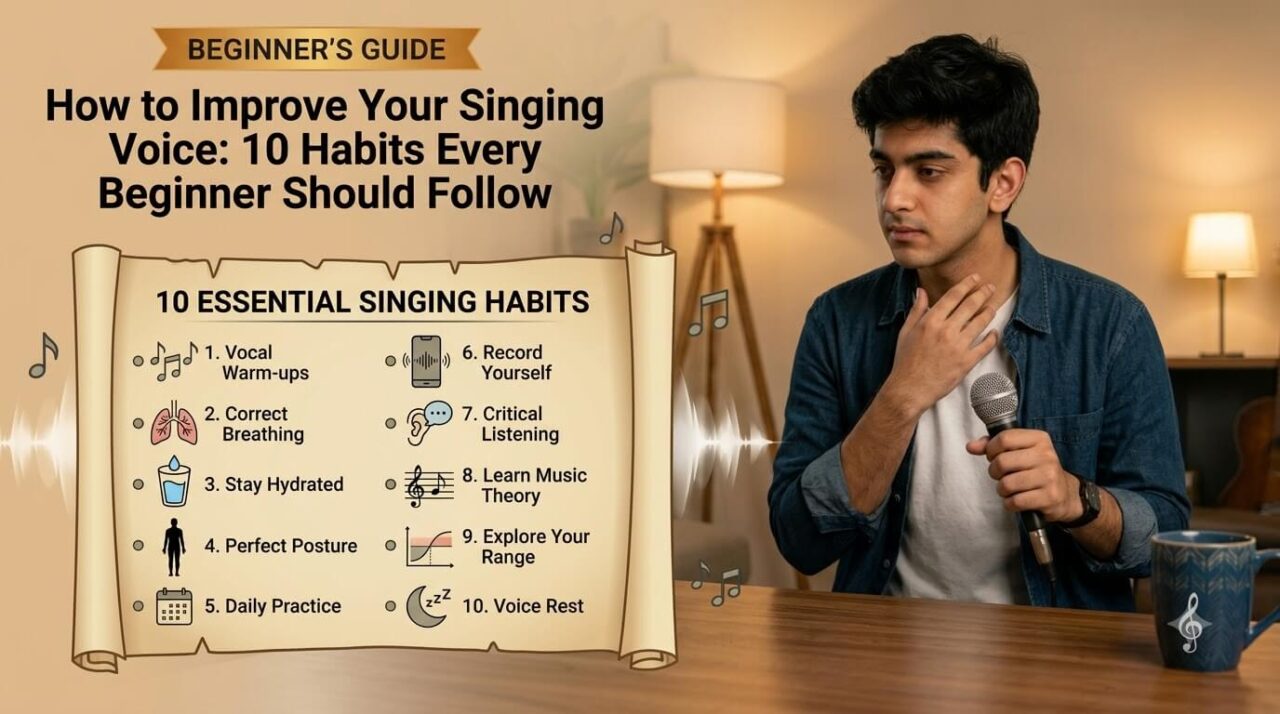
Singing is one of the most natural forms of musical expression, but developing a strong and controlled singing voice requires more than simply singing frequently.
Good singing involves pitch, breathing, rhythm, pronunciation, tone, listening skills and confidence. Whether you want to sing Bollywood songs, classical music, devotional music or contemporary styles, developing the fundamentals can make a significant difference.
For beginners, the goal should not be to force the voice to sound powerful immediately. Instead, the focus should be on developing healthy and consistent singing habits.
1. Learn Proper Breathing
Breathing is one of the foundations of singing.
Many beginners take shallow breaths and then struggle to maintain notes or phrases.
Controlled breathing allows singers to manage airflow more effectively. Instead of taking unnecessarily large breaths, singers learn to breathe comfortably and use air efficiently.
Breathing exercises can become part of a regular warm-up routine.
2. Warm Up Before Singing
Just as athletes warm up before exercise, singers can benefit from preparing their voice before demanding vocal work.
Gentle exercises can help gradually prepare the voice.
A warm-up might include humming, gentle scales and simple vocal exercises.
The important point is to avoid forcing high or uncomfortable notes during warm-up.
3. Work on Pitch
Pitch refers to how high or low a musical note is.
Being able to match a note accurately is one of the most important skills for singers.
Beginners can practise singing along with a keyboard, piano or another reference instrument.
Start with comfortable notes and gradually expand the range as control improves.
4. Develop Your Sense of Rhythm
A singer must do more than sing the correct notes.
They also need to enter at the right time, maintain rhythm and understand the structure of a song.
Clapping along with a beat can be a simple way to develop rhythmic awareness.
Singers can also practise counting beats and identifying different rhythmic patterns.
5. Improve Pronunciation
Clear pronunciation helps listeners understand the lyrics.
This is especially important when singing songs in different languages.
Singers should pay attention to vowels, consonants and word endings while maintaining the musical quality of the phrase.
Good pronunciation should not feel exaggerated; it should remain natural and connected to the song.
6. Listen Carefully
Good singers are also good listeners.
Listening carefully helps students identify pitch, timing, pronunciation, dynamics and phrasing.
Instead of listening to music only for entertainment, try listening analytically.
Ask yourself:
- How does the singer begin the phrase?
- Where do they breathe?
- Which words receive emphasis?
- How does the volume change?
- How does the singer approach high notes?
These observations can improve musical understanding.
7. Don’t Try to Copy Another Singer Completely
It is natural for beginners to admire famous singers and imitate them.
Imitation can help develop awareness, but the long-term goal should be to develop your own voice.
Every singer has a different natural tone, range and vocal character.
A good teacher can help students understand their natural voice instead of forcing them to sound like someone else.
8. Practise Consistently
Consistency is one of the biggest factors in musical improvement.
You do not necessarily need to practise for hours every day.
A shorter, focused practice session performed regularly can be more effective than occasional long sessions.
A beginner might spend time on:
- Breathing
- Warm-ups
- Scales
- Pitch exercises
- Rhythm
- Song practice
As confidence increases, practice can become more advanced.
9. Record Yourself
Recording your practice can reveal things that are difficult to notice while singing.
You may hear problems with pitch, timing, pronunciation or breath control.
Listening back to recordings can therefore become a useful part of self-evaluation.
Don’t become discouraged by mistakes. Use recordings to identify what needs improvement.
10. Learn With Proper Guidance
Online tutorials can introduce useful concepts, but individual feedback is difficult to replace.
A teacher can hear specific issues and adjust exercises accordingly.
Structured singing lessons can also help students progress in a logical order instead of jumping between unrelated exercises.
Jays Octave provides singing education for Kids, Teens and Adults, including Bollywood, Playback and Classical Singing.
For someone searching for singing classes in Surat, structured training can provide an organised environment for developing vocal skills.
Different Types of Singing
Singing is not limited to one style.
Bollywood Singing
Bollywood songs often combine melody, rhythm and expressive delivery. Students interested in playback-style singing can work on pronunciation, phrasing and expression.
Classical Singing
Classical training can develop a deeper understanding of notes, scales, rhythm and musical discipline.
Playback Singing
Playback singing requires singers to interpret a song while matching its mood, language and musical arrangement.
Students can explore different styles based on their interests.
Singing for Children
Children can benefit from age-appropriate vocal training.
Lessons should be enjoyable and should encourage children to explore music without creating unnecessary pressure.
Music training can also encourage concentration, listening and confidence.
Singing for Adults
Adults can start singing lessons even without previous formal training.
Some adults want to improve their voice as a hobby, while others may want to perform or develop professional skills.
The learning process can be adjusted according to the individual’s experience and goals.
What Should You Avoid?
Beginners should avoid forcing the voice, especially when attempting notes outside their comfortable range.
If singing causes persistent pain or discomfort, stop and seek appropriate professional advice.
Singing should develop through controlled technique, not through excessive force.
How Long Does It Take to Improve?
Improvement varies from person to person.
Factors include:
- Previous musical experience
- Practice frequency
- Technique
- Listening ability
- Vocal coordination
- Instructor feedback
- Individual goals
The best way to measure progress is to compare your current ability with your earlier performance rather than comparing yourself with another singer.
Start Building Your Singing Skills
A better singing voice is developed through consistent practice, proper technique and patience.
Work on breathing, pitch, rhythm, pronunciation and musical expression. Listen carefully, record your progress and seek guidance when needed.
For people interested in developing their vocal skills through structured singing classes in Surat, Jays Octave provides singing courses alongside several other music disciplines.
Frequently Asked Questions
Can anyone learn to sing?
Most people can improve their singing with appropriate practice and instruction.
How often should I practise singing?
Regular practice is generally more effective than occasional long sessions.
Can beginners join singing classes?
Yes. Beginners can start with basic breathing, pitch and vocal exercises.
Can children learn singing?
Yes, with age-appropriate instruction and a comfortable learning environment.
Can singing lessons help with pitch?
Structured exercises can help students develop better pitch awareness and control.