
Introducing children to music can open the door to creativity, confidence and lifelong enjoyment. But one question many parents face is: which musical instrument should my child learn? There is no single instrument that is best for every child. Some children enjoy singing. Others naturally become interested in keyboards, piano, guitar or percussion instruments such...
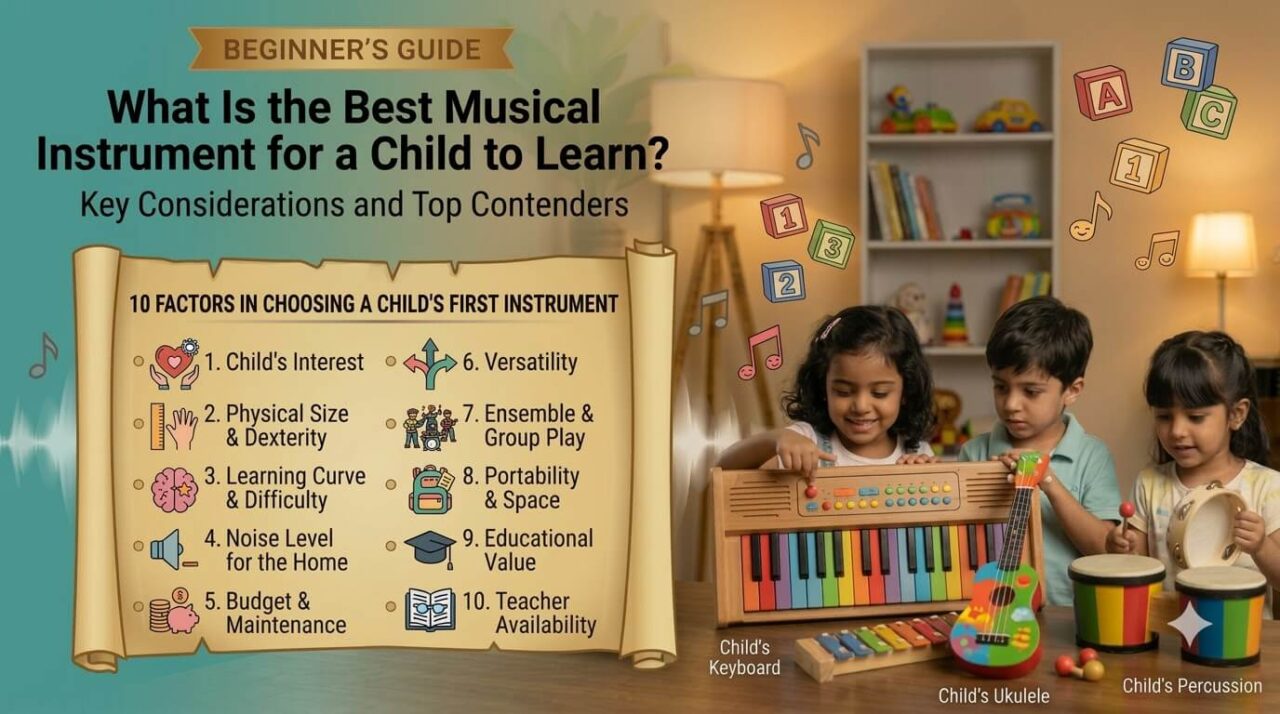
Introducing children to music can open the door to creativity, confidence and lifelong enjoyment. But one question many parents face is: which musical instrument should my child learn?
There is no single instrument that is best for every child.
Some children enjoy singing. Others naturally become interested in keyboards, piano, guitar or percussion instruments such as tabla.
The best choice usually depends on the child’s interests, age, personality and willingness to practise.
Why Should Children Learn Music?
Music education can encourage children to develop several skills at the same time.
Learning an instrument involves listening, memory, coordination, concentration and repetition.
Children also learn that improvement comes from consistent practice. This can encourage patience and discipline.
Music can also provide children with a creative activity where they can express themselves.
Guitar for Children
Guitar is a popular choice among children and teenagers.
It can be especially attractive to children who enjoy songs and want to accompany themselves while singing.
Beginners can start with basic chords, simple melodies and rhythm exercises.
As they improve, students can explore different styles and techniques.
However, the size of the guitar should be appropriate for the child.
Piano for Children
Piano is another excellent option.
Because the notes are visually organised, children can develop an understanding of musical patterns.
Piano learning can introduce:
- Notes
- Scales
- Chords
- Rhythm
- Music reading
- Coordination
It can also provide a strong foundation for understanding music more broadly.
Keyboard for Children
Keyboard can be particularly engaging for children who enjoy experimenting.
Different sounds and rhythms can make lessons interesting.
Students can learn basic melodies, chords and accompaniment while gradually developing music theory knowledge.
Jays Octave provides keyboard learning from basic to advanced levels and offers classes for Kids, Teens and Adults.
Singing for Children
Not every child wants to play an instrument.
Some children naturally enjoy singing.
Singing lessons can introduce children to breathing, pitch, rhythm, pronunciation and musical expression.
Jays Octave offers singing training covering areas such as Bollywood, Playback and Classical Singing.
Tabla for Children
Tabla is an excellent option for children interested in rhythm.
It can help develop coordination and timing while introducing students to Indian musical traditions.
Children can start with basic strokes and simple rhythmic exercises.
Harmonium for Children
Harmonium can be a good option for children interested in Indian music and vocal accompaniment.
It can help students understand swaras, melodies and basic musical structure.
It may also complement singing lessons.
How Should Parents Choose?
Parents should avoid choosing an instrument solely because they think it is prestigious or popular.
Instead, ask the child what they are interested in.
You can ask:
- Which instrument looks interesting?
- What type of music do you enjoy?
- Do you like singing?
- Do you enjoy rhythm?
- Would you prefer playing alone or with others?
Interest can be one of the strongest motivators.
Consider the Child’s Age
Age can influence the learning approach.
Younger children may need shorter, more playful lessons.
Older children can generally handle more structured technical learning.
Teenagers may have specific musical preferences and may want to learn songs they already enjoy.
Don’t Make Practice a Punishment
Parents naturally want their children to practise.
However, constantly treating practice as a punishment can reduce motivation.
Instead, create a routine and celebrate progress.
Even small achievements matter.
For example:
- Learning a new chord
- Playing a complete song
- Singing a melody correctly
- Completing a rhythm pattern
Group vs Private Classes
Both group and private learning can be useful.
Group classes allow children to learn with other students and develop listening and social skills.
Private lessons provide more individual attention.
Jays Octave provides group and private learning options in addition to regular music classes and online courses.
What Should Parents Look for in a Music Academy?
Consider:
- Experienced instructors
- Structured curriculum
- Age-appropriate teaching
- Practical learning
- Performance opportunities
- Comfortable environment
- Suitable timings
- Regular feedback
Parents in Surat looking for music classes for kids can compare these factors before selecting a course.
Don’t Expect Immediate Perfection
Every child learns differently.
Some children progress quickly with technique. Others may develop confidence first.
The goal should be to encourage steady improvement rather than demanding immediate perfection.
Music Can Become a Lifelong Skill
One of the greatest benefits of learning music is that it can remain valuable beyond childhood.
A child who learns an instrument may continue playing as a teenager, adult or even later in life.
The skill can become a hobby, creative outlet or performance ability.
Final Thoughts
The best instrument for your child is usually the one that matches their interest and encourages them to keep learning.
Guitar, piano, keyboard, singing, harmonium and tabla can all provide valuable musical experiences.
Jays Octave offers these disciplines for different age groups, including Kids, Teens and Adults, making it possible to explore different approaches to music education.
If you are looking for music classes in Surat for your child, start by identifying what your child enjoys most and then choose a structured learning environment.
Frequently Asked Questions
Which instrument is easiest for children?
There is no universally easiest instrument. The best choice depends on the child’s interest and learning style.
Is guitar suitable for children?
Yes, provided the instrument is appropriately sized and lessons are adapted to the child’s level.
Can children learn singing?
Yes. Age-appropriate vocal lessons can introduce children to pitch, rhythm and musical expression.
Should my child learn piano or keyboard?
Both can be excellent choices. Consider your child’s interests, space and long-term goals.
How often should children practise?
Short, consistent practice sessions are often more manageable than very long sessions.