
Rhythm is an essential part of music. From classical compositions to devotional songs and contemporary performances, percussion helps establish the beat and brings musical pieces to life. The tabla is one of India’s best-known percussion instruments. If you are interested in tabla classes in Surat, learning the fundamentals can introduce you to the fascinating world...
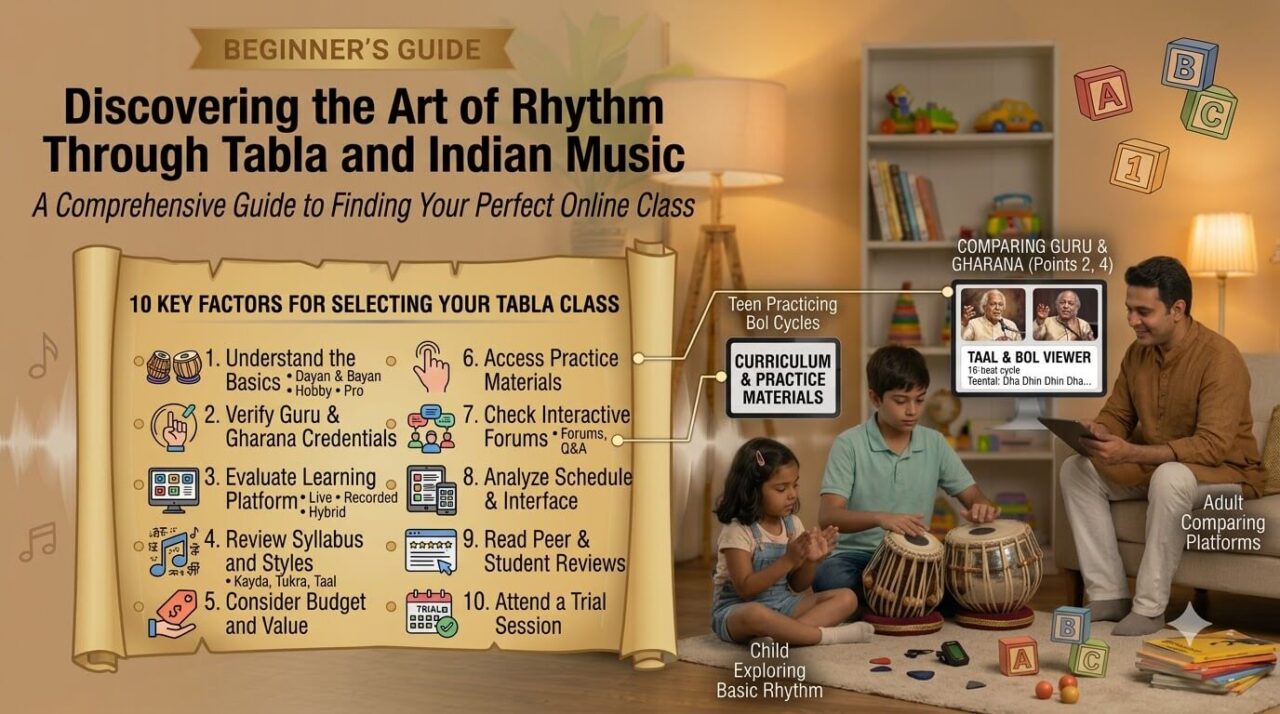
Rhythm is an essential part of music. From classical compositions to devotional songs and contemporary performances, percussion helps establish the beat and brings musical pieces to life.
The tabla is one of India’s best-known percussion instruments. If you are interested in tabla classes in Surat, learning the fundamentals can introduce you to the fascinating world of Indian rhythm.
1. Get to Know the Tabla
The tabla consists of two drums played with the fingers and hands. Each drum produces a different range of sounds, allowing musicians to create varied rhythmic patterns.
Beginners first learn about the instrument, correct sitting posture and comfortable hand positioning.
2. Learn the Basic Strokes
Tabla training introduces learners to individual strokes, often called bols. Practising these sounds slowly helps students develop control, clarity and consistency.
It is important to learn the correct technique rather than relying only on speed. As your control improves, you can combine strokes into simple rhythmic patterns.
3. Understand Taal and Rhythm
Taal is a rhythmic cycle that organises beats into a repeating structure. Understanding the cycle helps musicians recognise where a pattern begins, how it develops and where it resolves.
Beginners can start with simple cycles and gradually explore more complex patterns as their timing improves.
4. Practise With Songs and Other Musicians
Playing along with familiar songs can help students understand how percussion supports a melody. It also teaches them to listen carefully, maintain a steady beat and adjust their playing to the music.
With further training, learners can explore accompaniment, rhythmic variations and solo performances.
5. Develop Accuracy Before Speed
Regular practice is the key to learning tabla. Repeating short patterns at a comfortable tempo helps build muscle memory and rhythmic accuracy.
Use a metronome or practise with a teacher when appropriate. Increase the speed only when the pattern sounds clear and controlled.
6. Learn From Structured Tabla Lessons
A guided course can help you understand hand techniques, bols, taal and rhythmic patterns in the correct sequence. Feedback from a teacher is particularly useful for developing clarity and avoiding inefficient playing habits.
Jays Octave School of Music offers tabla lessons for learners interested in exploring Indian percussion and improving their rhythmic skills.
Start Learning Tabla in Surat
Whether you are new to percussion or want to develop your existing skills, tabla can offer a rewarding musical journey.
Contact Jays Octave School of Music to enquire about tabla classes, suitable learning levels and available schedules.
Contact: +91 90161-00267